Why I Built FeedbackBasket
The story behind building one central place for product feedback, now shaped for builders and the agents that help them move faster.
 By Vlad Palacio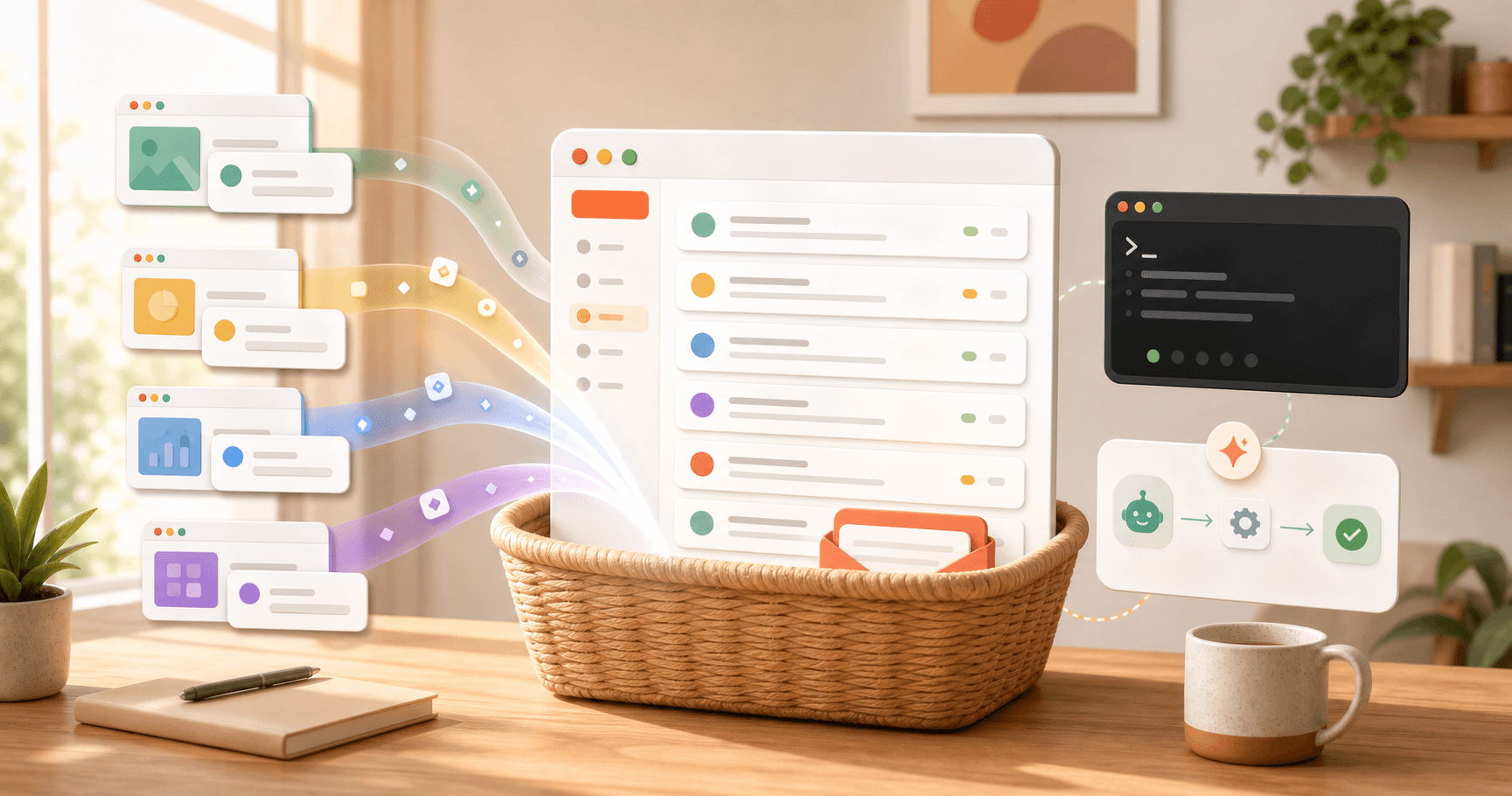
As a prolific builder, I kept running into the same problem: every project had feedback, but the feedback lived everywhere.
Some of it arrived through emails. Some came from friends in chat. Some was buried in dashboards, widget submissions, notes, and bug reports. When I was moving fast across multiple products, the hardest part was not just collecting feedback. It was keeping enough context around it to actually do something useful.
FeedbackBasket started as my answer to that mess: one central place to gather feedback from everything I build.
Why a third version?
I am now on the third version of this project because each version taught me what was missing.
The early versions were about proving the basics: collect feedback, organize it, and make it visible. But the way I build has changed. I work with agents more often now, and I want my tools to be easy for both humans and agents to operate.
That changed the product direction. FeedbackBasket v3 is not just a dashboard. It is a feedback system that can sit inside an agent-assisted workflow.
Agent-friendly by design
This version includes a skill and a CLI because I wanted a builder to be able to ask their agent to help with feedback instead of manually digging through every screen.
Once you authenticate, your agent can use the FeedbackBasket CLI to inspect projects, read feedback, list bugs, and help triage what needs attention. The goal is simple: if a user reports a problem, your agent should be able to find it, understand it, and help you act on it.
That matters because feedback is only valuable when it gets close to the work.
What I want FeedbackBasket to become
I want FeedbackBasket to be the place where feedback stays alive.
Not a static inbox. Not a forgotten form submission. A working memory for your products: what users noticed, what broke, what confused them, and what they loved enough to tell you.
For me, that means a central dashboard, a widget, bug context, AI summaries, a CLI, and agent support all pointing toward the same outcome: less lost signal, more useful action.
FeedbackBasket exists because builders need a better way to listen while they keep building.
Build with the feedback open
Try FeedbackBasket on your next project.
Add the widget, connect the CLI, and let your agent help keep feedback from falling through the cracks.